
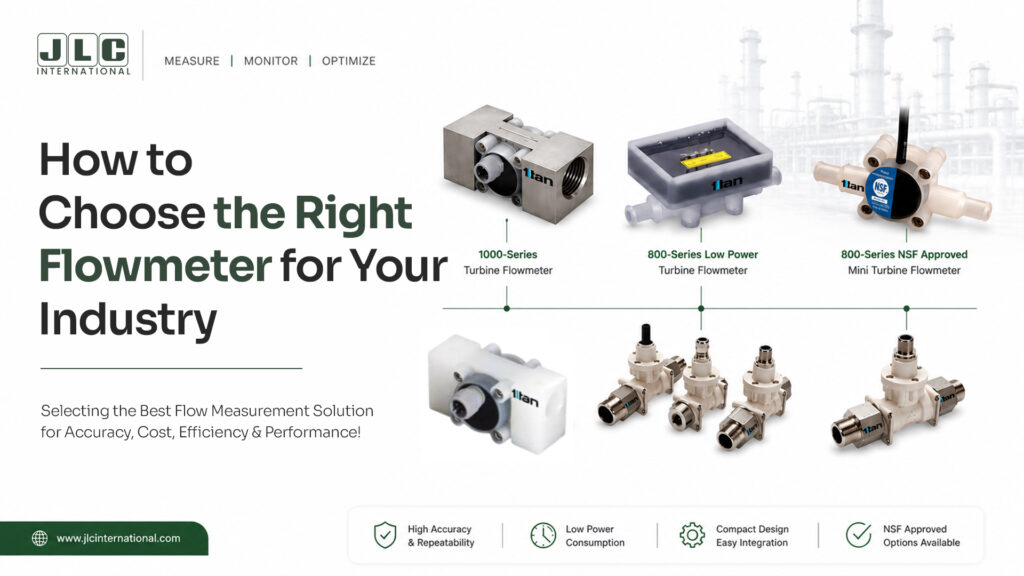
How to Choose the Right Flowmeter for Your Industry
The selection of a suitable flowmeter isn’t merely a technical box to tick; it’s an important choice that impacts the effectiveness, security, and revenue of your entire operation. In the world of industrial processing, precision is the only money that counts. In any application, including high viscosity chemicals, sterile food products, or volatile gases, a 1% variance in accuracy can cost thousands of dollars in wasted products, resources, and quality losses.
This guide is not a “one size fits all” document; it is a comprehensive, scientific framework for determining the technology most suited to the flow measurement application. The initial costs of different meters (electromagnetic, ultrasonic, Coriolis, vortex) will be compared with their long-term reliability. With the correct environmental variables (flow pressure, flow temperature, fluid dynamics, etc.) matched with the appropriate hardware, you can turn your flow measurement into an efficient asset for your facility.
Understanding Your Flow Measurement Needs
Before discussing the different types of flowmeters, you should ask yourself some basic questions regarding your needs. What type of fluid are you measuring? Is it water, oil, gas, or something more complex like slurry or chemicals? The solution to this question has a big effect on your choice of flowmeter, as different fluids respond differently & the measurement method varies. The measurement of clean water in a pipe, for instance, is completely different from the measurement of thick honey or sand particles in a pipe.
Think of a baker who decided to use the wrong flowmeter to measure the flow of flour. Flour is powdery, leading to frequent clogging and inaccurate readings, which in turn result in variable product quality and customer dissatisfaction. A basic error in judgment resulted in thousands of dollars in lost revenue & replacement equipment. The viscosity, temperature, pressure, and corrosiveness of your fluid are all crucial factors in determining which flowmeter technology will be effective in your application.
Another very important aspect is your level of accuracy. There are cases where extreme precision, up to 0.1%, is required, and in other cases, it could be as high as 5%. High-precision flow meters are usually very expensive; if you don’t need the highest accuracy, you don’t need to spend more than necessary. Plus, take your flow range into account. Are you measuring very small volumes per minute or very large volumes per hour? Flow velocity & pipe size in your system will also affect the choice of flowmeter, as some flowmeters are more effective at high velocities. In contrast, others are more effective at low velocities.
Popular Flowmeter Technologies & Their Applications
One of the most popular types of flow meters for conductive liquids is the magnetic flowmeter (often referred to as a “mag meter”). The devices operate by generating a magnetic field in the pipe and measuring the induced voltage as the conductive fluid flows through it. Have no moving parts that can wear out or cause a pressure drop, making them perfect for water, wastewater, chemicals & food product applications. Magnetic flow meters are used extensively in many water treatment plants because they can measure water containing dirt or particles.
Unlike other types of flowmeters, ultrasonic flowmeters measure flow using sound waves. They can be attached externally to existing pipes without cutting or stopping production and are incredibly convenient for retrofitting older pipes. Their performance is very good with clean liquids, and they are often used in HVAC, cooling water, and energy management. But they have trouble with fluids or liquids that contain bubbles, which can affect the sound waves traveling through them.
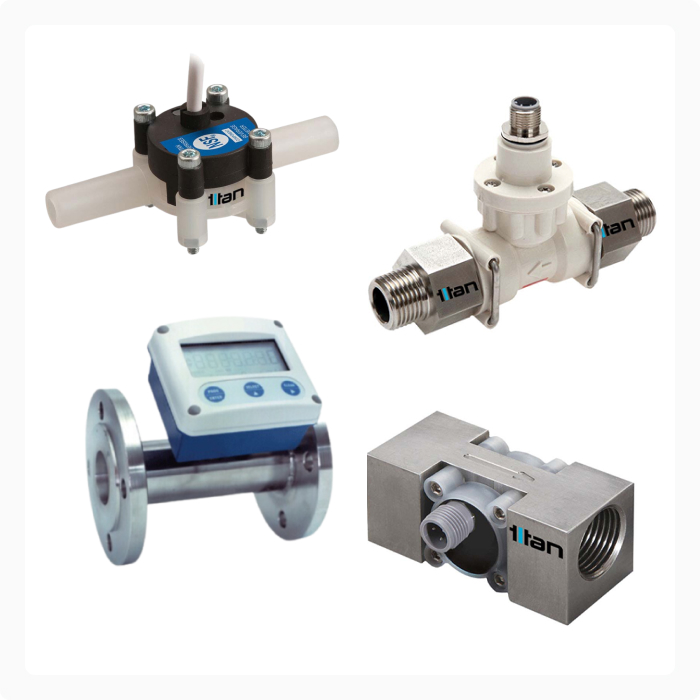
Like pinwheels spinning in the wind, turbine flowmeters measure flow velocity with a spinning rotor. These are mechanical devices and are very accurate for clean liquids & gases; hence, they are widely used in custody transfer applications, where accurate measurement is legally required. Turbine flowmeters are often used to measure refined products in oil & gas applications because of their excellent repeatability & can be used at high pressure. The drawback is that they tend to wear out from dirty fluids or high vibration.
Coriolis flowmeters are at the top end of the flow measurement technology range and can also measure mass flow, density, and temperature. The operation of these advanced devices relies on vibrating the flow tube & observing how the flowing fluid influences its vibration. They are very costly, but they’re also invaluable for measuring mass rather than volume, such as in chemical dosing, pharmaceutical production, and recipe accuracy in food processing.
Industry-Specific Considerations & Best Practices
Each industry has its own set of problems that can greatly affect the choice of flowmeter to be installed. For the food & beverage industry, for example, flowmeters must meet strict sanitary standards and be easily cleaned or sterilized. Stainless steel structure, smooth internal surfaces, and CIP (Clean-in-Place) compatibility are no longer desirable features, but requirements. Food processors select electromagnetic flowmeters with sanitary liners because these flowmeters lack dead zones where bacteria can accumulate.
However, chemical processing plants have their own unique set of problems, and sometimes corrosive, toxic, or explosive fluids are involved. In this case, material compatibility is key; a regular flowmeter won’t work in a sulfuric acid line. The applications frequently involve exotic materials such as Hastelloy and PTFE linings, as well as explosion-proof housings in hazardous-area applications. Though it may appear expensive at first, the safety advantages & long-lasting durability make it worth it.
For oil & gas applications, accuracy & reliability are more desirable characteristics than cost, particularly in custody transfer applications where measurement error translates into revenue loss. These facilities tend to have multiple flowmeter systems installed and need devices certified for Fiscal Measurement. Weather is also a major factor; flowmeters on offshore platforms must be salt-spray-, vibration-, and weather-resistant. These are challenging applications, and many operators opt for turbine or ultrasonic flowmeters.
Water & wastewater treatment facilities face budget constraints and must manage complex fluids containing debris, chemicals, and fluctuating flows. Magnetic flowmeters dominate this industry because they can handle dirty water, require minimal maintenance, and provide reliable performance over long periods. They are also capable of measuring bidirectional flow, which makes them a great choice for applications where the direction of flow may vary.
Making Your Final Selection Decision
With the knowledge of technologies & industry considerations, how do you then make the final decision? The first thing to do is determine the detailed specification sheet that lists your fluid’s properties, flow rates, accuracy, environmental conditions, & budget constraints.
Remember the total cost of ownership (TCO), which includes initial purchase, installation, maintenance, calibration, and expected life. While it may be tempting to opt for a more affordable flowmeter initially, it could end up costing more over the years due to frequent repairs or replacements. Let’s look at a manufacturing plant that purchased a less expensive flowmeter costing $2,000, but incurred $15,000 in maintenance & downtime expenses over 3 years.
Installation is another major factor that can drive up your cost. Some flowmeters require long straight pipe runs before and after the measurement point, which may require expensive piping changes. Others could also be set up in challenging areas, or even outside the process, without interrupting it. Don’t ignore these installation factors; they can cause some unexpected problems if they aren’t taken into account when making a decision.
Think ahead, too. Will your flow rates increase as your business expands? Do you require extra functions such as data logging or remote monitoring? You will avoid unnecessary obsolescence and ensure you have a flowmeter system that can grow with you.
Conclusion
Choosing the best flowmeter for your industry doesn’t need to be intimidating if you take a systematic approach. Don’t confuse the “best” flowmeter with the most expensive and advanced flowmeter; it’s the flowmeter that best suits you, and that will give you reliable service for the long haul. Do not be cheap on the time needed to fully consider your application needs, understand the technologies you have available, and factor in the total cost of ownership (TCO) and the upfront cost of the application purchase.
Do not hesitate to contact flowmeter manufacturers or experienced system integrators who can offer tips based on applications similar to yours. Numerous companies provide application engineering assistance and can help you avoid costly errors. Request demonstration units or pilot testing at JLC International to ensure performance before large-scale purchases.
Product quality, reduced maintenance costs, and improved process control are just a few of the benefits you’ll gain from the investment you make in your flowmeter today. From the treatment plant to the processing facility, or to a pipeline, the right flowmeter can be a priceless asset that adds efficiency and profitability to your operation.